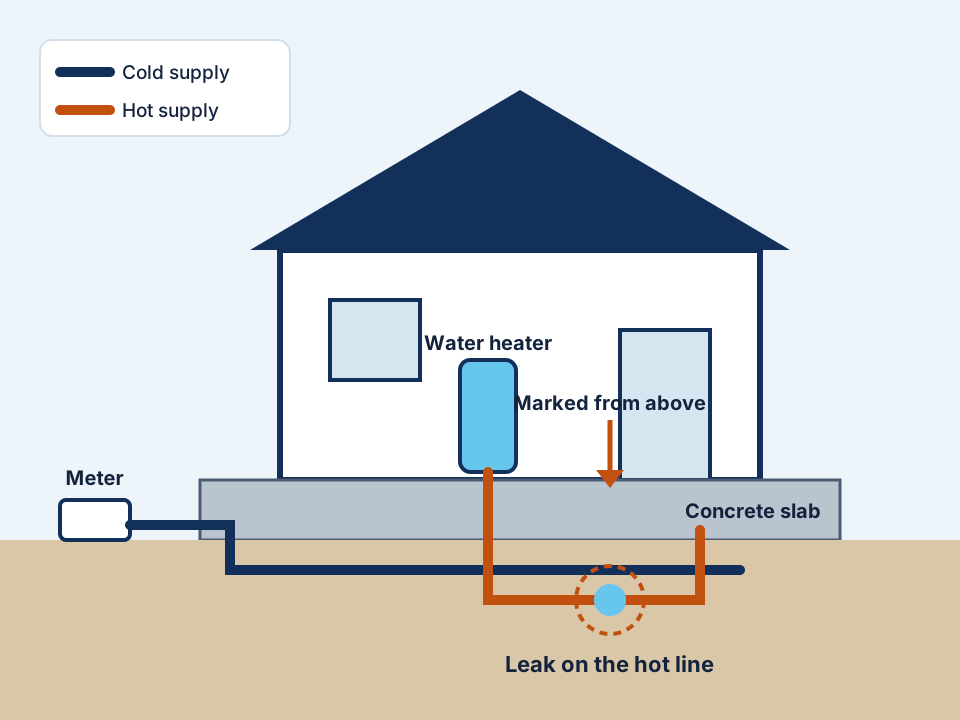
A leak search usually starts with one of two problems: a leak you suspect is under the concrete slab, or water loss you can't place at all. Each one has its own page, and each one ends the same way, with a visit from a leak detection professional who finds the source before anyone opens a floor or wall.
You think the leak is under the slab
Warm patches on tile, the sound of water with every tap closed, or damp flooring away from any fixture all point toward a supply line under the concrete. Start with slab leak detection in Goodyear, which explains what the visit involves and what you get at the end of it.
Many Goodyear homes sit on a concrete slab, so the pipes that feed the kitchen and bathrooms often run through or under it. That's why a leak there stays hidden for a while and why finding the exact spot matters before any repair.
You know you're losing water but not where
A meter that keeps turning and a bill that jumped can come from the slab, a wall, the yard line, an irrigation valve, or a toilet. Water leak detection covers the whole-house search, including the service line between the meter and the house.
If you'd like to narrow it down yourself first, the two-hour meter test takes no tools and tells you whether water is moving at all.
You already know where the leak is
Once a leak is located, the questions change to how to repair it and what it costs. Slab leak repair options compares spot repair, rerouting, and pipe lining, and the cost guide shows published price ranges with their sources.
We stay out of the repair decision. You get the information, and the choice stays with you.
What we don't cover
This is a leak detection resource, not a general plumbing service. Clogged drains, water heater installs, gas lines, and pool leaks are outside what we set up. For a pool losing water, a pool leak specialist is the right call.