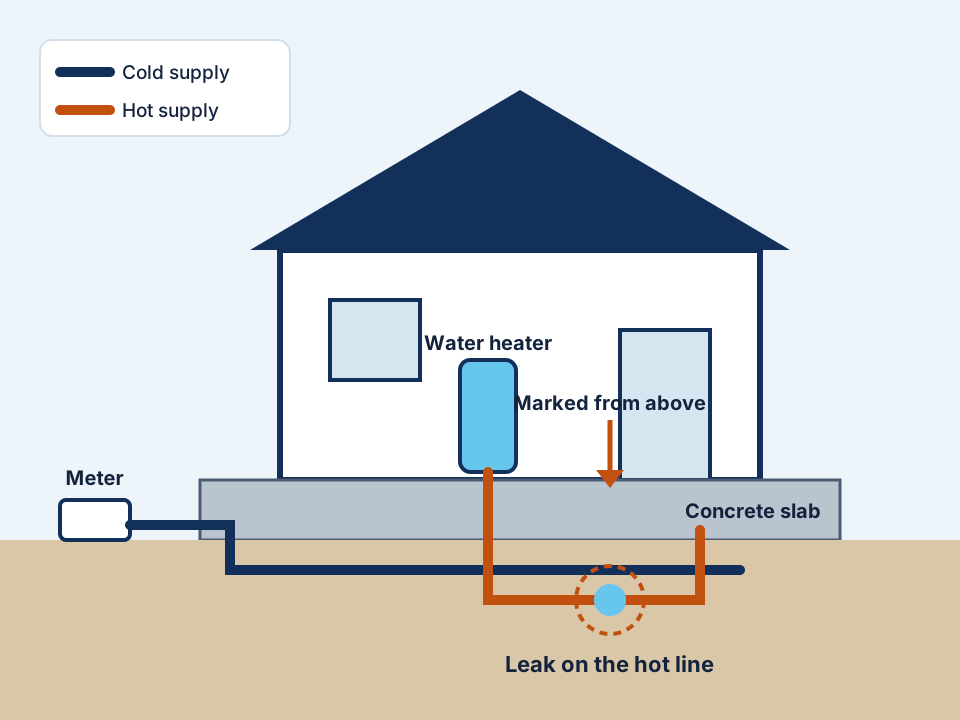
Slab leaks happen when a supply line under or within the concrete wears through, cracks, or separates at a joint. The usual causes are abrasion, water chemistry, installation problems, and movement in the soil or slab. The cause matters because it helps decide between a single spot repair and rerouting the line.
Abrasion against concrete or other pipes
Pipes expand and contract as hot water runs through them. Where a line rubs against concrete, gravel or another pipe, that small movement can wear a hole over the years. Hot water lines move the most, which is one reason hot-side leaks are common.
Water chemistry
Minerals and the chemistry of the water affect how pipes age. Hard water can leave scale, and some water conditions are harder on copper than others. Whether chemistry played a role in your home is a question for the professional who sees the pipe.
Installation and materials
A kinked line, a poorly made joint, or pipe damaged during the pour can fail years later. Different eras used different pipe, and many homes have copper, PEX or a mix. Ask what your pipe is, because it changes the repair options.
Soil and slab movement
Soil under a slab can shift as it wets and dries, and some soils swell. That's one reason post-tensioned slabs are common in Arizona. Movement can stress a line where it passes through the slab.
Age
Goodyear's housing includes late-1980s and 1990s neighborhoods as well as homes finished in the last few years. An older system has simply had more time to wear. A newer home can still leak, often from installation issues, and may still be inside a builder's warranty window; the Sedella page covers checking it.
Why the cause changes the repair
A one-off failure on otherwise good pipe and a line that is wearing along its length call for different repairs, and the repair options guide explains which route fits each. If you're not sure there's a leak yet, start with the signs.
Knowing the cause starts with knowing where the leak is, which is what a slab leak detection visit settles.