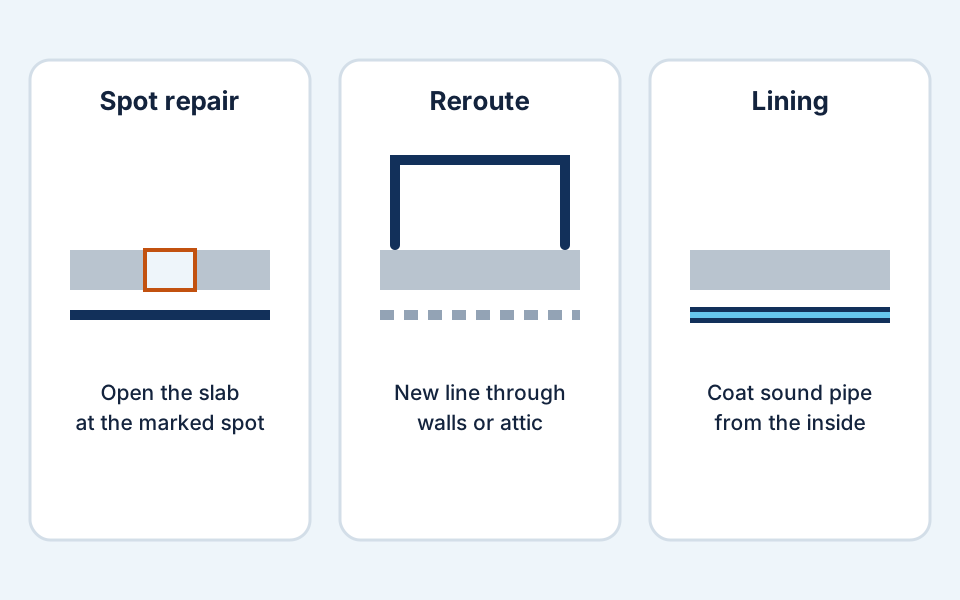
Once you know where a slab leak is, you have three main repair routes: open the slab at the spot and repair the pipe, reroute the line above the slab and abandon the leaking run, or line the old pipe from inside. The right one depends on the pipe's overall condition, the flooring over the leak, and whether this is the first leak or one of several.
Spot repair through the slab
The repair company lifts the floor covering at the marked spot, opens a small section of concrete, repairs the damaged pipe, and fills the opening. It's direct and often the least expensive route for a single leak on otherwise sound pipe.
The tradeoffs are mess and flooring. Tile or wood over the leak has to come up, and someone has to patch or replace it. If the slab is post-tensioned, the crew needs to locate the cables before any cutting.
Rerouting the line
Instead of opening the floor, the plumber caps the leaking run and runs a new line through walls or the attic to the same fixtures. It avoids breaking the slab and replaces the whole run, which helps if that line is likely to leak again.
The tradeoffs are drywall openings and patching, and a higher price for long runs. In Goodyear's attics, insulation and summer heat are worth asking about.
Pipe lining
The company cleans the line and coats it from inside with an epoxy lining, sealing small leaks without opening walls or floors. It suits pipe that is still structurally sound. It's not a fix for a line that is badly damaged or crushed.
Ask what the lining product is, what preparation the pipe needs, and what warranty the company offers on the work.
Whole-house repipe
If several lines are leaking or the pipe is wearing throughout, replacing the supply plumbing for the whole house may make more sense than repairing leaks one at a time. It's the largest job of the group, so have the leaks located first and compare more than one plan.
How to choose
Before any of this, the leak needs a written location from a leak detection visit. Then ask three questions. Is this the first leak on this line? What's the condition of the pipe on either side of the leak? What sits on top of the leak: tile, wood, carpet, or cabinets? The answers usually make the choice clear.
Compare the options side by side, with the same leak and the same scope in each. Published price ranges are in the cost guide, and you can check any Arizona contractor's license at the Registrar of Contractors before you sign.