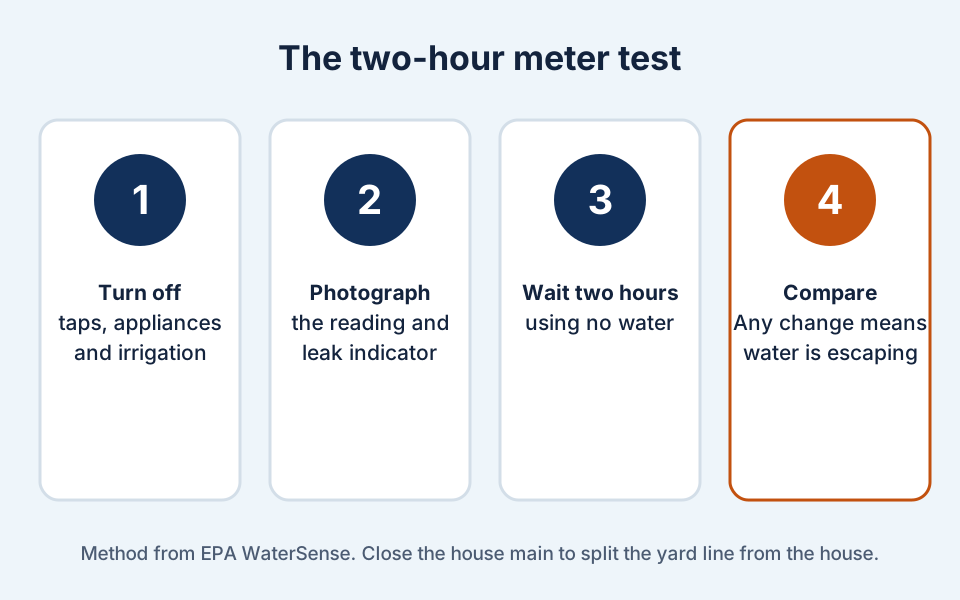
Water leak detection is the wider search: when your meter says water is escaping but nothing in the house says where, a leak detection professional checks the slab, the walls, the service line from the meter, and the irrigation system until the source turns up. We set up the visit for Goodyear homes so you aren't paying for floors to be opened on a hunch.
Where hidden leaks usually hide
In a slab-built Goodyear home, hidden leaks tend to fall into four places. The first is the supply lines under or within the slab. The second is supply lines inside walls, often behind a shower or a laundry box. The third is the service line that runs underground from the meter to the house. The fourth is the irrigation system, where a cracked lateral line or a weeping valve can lose water for months in a gravel yard without leaving a puddle.
Fixtures are the fifth place, and the easiest to rule out before booking a whole-house search. The slab leak or fixture leak guide covers the quick checks, starting with the toilets.
- Under-slab supply lines (hot or cold)
- In-wall supply lines behind showers and laundry boxes
- The buried service line from the meter
- Irrigation lines and valves
- Toilets, softeners and other fixtures
How a whole-house leak search works
The search starts at the meter. With the house shut down, the professional checks whether the meter still moves. Then sections get isolated one at a time: closing the main valve at the house separates the service line from everything inside it, and closing the irrigation supply separates the yard.
Once the leaking section is known, the same tools used under slabs narrow it to a spot, and the detection methods guide explains how each one works.
Leaks that start with a remodel
Supply lines run inside the walls behind kitchens, bathrooms and laundry boxes, and they are easy to hit. A new kitchen backsplash, a mounted TV, new cabinets or a laundry sink all mean screws or nails going into a wall, and any one of them can pierce or nick a line. The water then runs inside the wall cavity, out of sight, rather than onto the floor.
That makes the timing a clue. If your bill or meter changed after a project, tell us what was done, which walls were worked on, and roughly when, so the search starts there instead of under the slab. Newer homes are often the ones getting their first upgrades, which is why our Canyon Trails and Sedella pages point here.
A leak like that is a wall search, not a slab one. Once the wall is identified, the repair usually goes through a small opening in the drywall rather than the floor.
Leaks outside the house
A soggy patch between the street and the house, grass that stays green in one strip, or a meter that keeps turning with the house main closed all point to the service line. Who is responsible for which part of that line depends on your water provider's rules, so ask them before anyone digs. The service areas page shows which provider serves your part of Goodyear.
Irrigation leaks are worth checking separately. Run each zone, then walk it. Look for a valve box with standing water or a drip line emitting far more than the others. Our Canyon Trails page walks through ruling out the yard before a slab search.
Why a small leak is worth finding
EPA WaterSense estimates that household leaks waste more than 9,300 gallons a year in an average home, and that about one home in ten has leaks wasting 50 gallons or more a day. Their Fix a Leak Week page also gives a rough winter benchmark: a family of four using more than 12,000 gallons a month probably has a serious leak.
Water you pay for is only part of it. A leak under a slab or inside a wall keeps wetting materials that aren't meant to stay wet. Finding it early usually means a smaller repair.
Getting the leak found
If the meter test shows water moving and you can't place it, the next step is a leak detection visit. Tell us what you've noticed, which part of Goodyear you're in, and whether you've already ruled anything out. Use the form below or the request page, and we'll set up the visit.
If the search lands on the slab, the slab leak detection page explains what comes next, including the post-tension check.