A floor patch that feels warm when the rest of the room doesn't is a classic sign of a hot water line leaking under the slab. The escaping hot water heats the concrete from below. It's worth checking a few other causes, then having the line located before anyone touches the floor.
Why a hot water leak warms the floor
Hot water lines run from the water heater to sinks, showers and appliances, and in many slab homes part of that run is under or within the concrete. When one leaks, hot water keeps flowing out as long as the water heater refills, and the concrete above it warms up. The warm area often sits in a hallway, kitchen or bathroom floor along the path from the water heater.
Check it before you worry
Walk the floor barefoot in the morning, before sun through windows can heat the tile. Note whether the warm area stays in the same place. Think about what sits under or beside that patch: in-floor heating, a duct, or a refrigerator's warm air can all heat a nearby area.
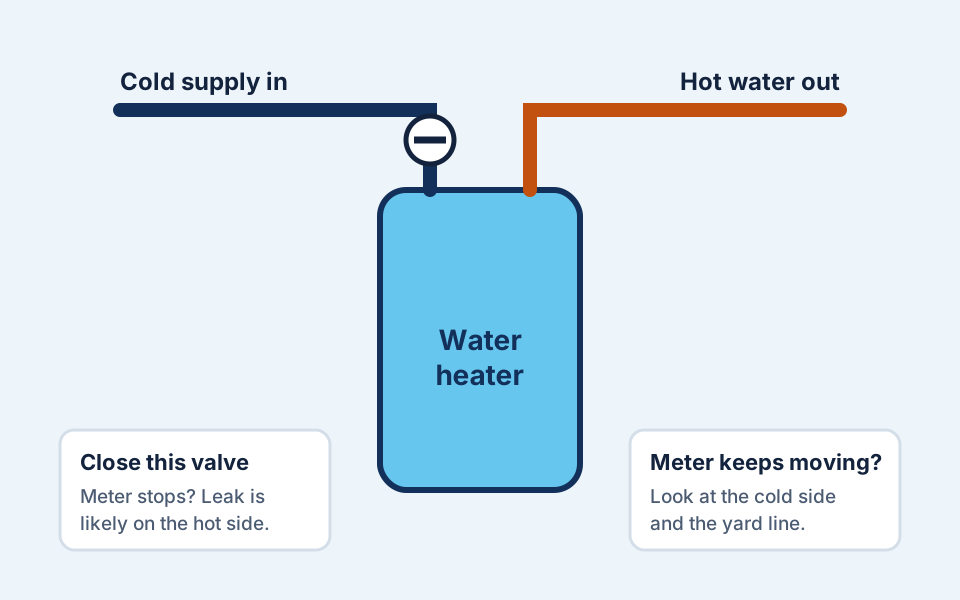
Then check the water heater. If it's running or refilling while nobody is using hot water, that supports a hot-side leak. You can also shut off the cold supply valve on top of the water heater for an hour and watch the meter. If the meter stops, the leak is likely on the hot side.
Other signs that usually come with it
Hot water leaks often bring a higher gas or electric bill, because the water heater keeps working. You might hear the water heater cycle more often or notice hot water running out sooner. Damp flooring near the warm spot and a moving meter with everything off add to the picture. The signs of a slab leak guide covers the full list.
How a professional confirms it
Thermal imaging is the natural tool here, because it shows the warm path of a hot line and the hotter spot where water is escaping. A leak detection professional usually pairs it with a pressure test of the hot side and acoustic listening to pinpoint the exact spot. The detection methods guide explains each step.
What to do now
If the leak seems large, with water showing or the water heater never resting, you can shut off the cold supply to the water heater to stop the hot side losing water until the visit. Then request a slab leak inspection with a note about the warm area, and we'll set up the visit.