The most reliable sign of a slab leak is a water meter that keeps moving while nothing in the house uses water. The other signs, like a warm floor, a higher bill, or a hissing sound, are clues that point toward the slab but have other possible causes too. Use the checker above to see which next step fits what you're noticing.
A meter that moves with everything off
Turn off every tap, the dishwasher, the washer, the softener and the irrigation. If the meter's leak indicator still spins or the reading changes over two hours, water is escaping somewhere. That doesn't prove the leak is in the slab, but it proves there is a leak. The meter test guide covers the steps.
A water bill that climbed
A jump with no change in household habits, especially in winter, is worth the meter test. Goodyear summer bills rise with irrigation and pools, though, so the high water bill guide shows how to compare the right months before you read too much into one bill.
A warm or hot spot on the floor
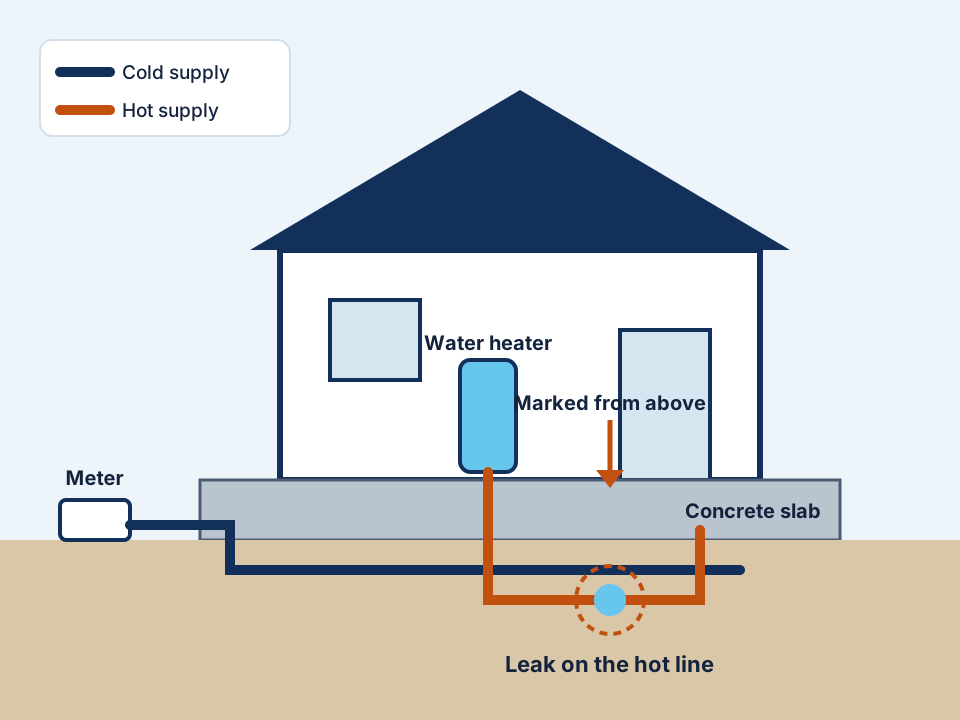
If one patch of tile or concrete feels noticeably warmer than the rest, or the water heater seems busier than it used to be, hot water may be escaping from a line underneath; pets sometimes find the patch first and start lying in one spot. The warm spot guide explains how to check it and what else can heat a floor.
The sound of running water
A faint hiss or rush near a floor or wall when nothing is running can be pressurized water escaping. Rule out a toilet refilling or the softener regenerating first, since both make similar sounds.
Damp flooring, carpet or baseboards
Water from a slab leak usually drains into the soil, but it can also wick up. Carpet that feels damp, wood flooring that cups, or baseboards that swell far from any sink or toilet are worth reporting. So is a musty smell that doesn't clear.
Lower water pressure
A large leak can drop pressure at the fixtures. It's a weak sign on its own, but it adds weight to the others.
What to do next
One sign with an obvious cause can wait. A moving meter, or two or more signs together, is worth a leak detection visit. Don't cut or drill the floor to look, especially if your garage floor carries a post-tension stamp. When you're ready, request a slab leak inspection and we'll set up the visit.