Slab leak detection finds the exact spot where a water line under your concrete floor is leaking, so any repair opens the smallest possible area. In Goodyear, where many homes sit on concrete slabs, it's the step that separates a targeted repair from guesswork with a jackhammer. Tell us what you're noticing and we'll set up a visit with a leak detection professional.
When a slab leak inspection makes sense
One odd sign on its own can have an ordinary cause. A combination is what usually justifies a visit. The common ones are a water bill that climbs without a change in habits, a warm or hot spot on a tile or concrete floor, the sound of running water when every fixture is off, damp carpet or swollen baseboards far from a sink or toilet, and a water heater that seems to run constantly.
Before booking, it's worth ruling out the easy leaks. A running toilet flapper or a softener stuck in its cycle can move the meter too. Our guide to the signs of a slab leak walks through each one and includes a short checker.
What happens at the visit
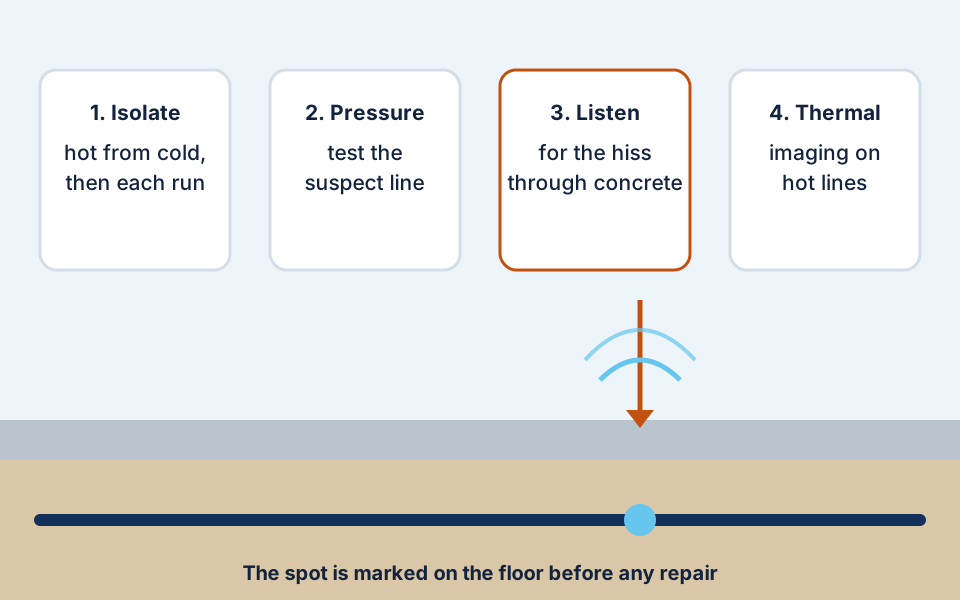
The professional starts with what you've already found: the signs, what the meter did, and anything you've ruled out. From there the job is to work out which line is losing water and then narrow it down to one spot, usually with more than one method agreeing before anything is marked. Our detection methods guide explains how each tool works.
Plan for the house to stay quiet, with no water running, while the search is on. The visit ends with the spot marked on the floor and nothing opened, so the repair decision is still yours to make.
What you should have when the visit ends
Ask for four things in writing: which line is leaking (hot or cold, and roughly which run), where the leak is marked, how the location was confirmed (which methods agreed), and which repair routes make sense given your floor and pipe. A mark on the floor fades or gets covered; the written note is what stays with you.
That note is what lets you compare repair quotes fairly, including from someone other than the person who found the leak. If a builder warranty or an insurance claim comes into it, the note is the evidence they will want, so keep it with your meter readings and bills.
If the visit finds no slab leak, that's useful too. It points the search toward a wall, the yard line, or a fixture, and it keeps anyone from opening a floor for nothing.
Post-tension slabs and why location matters
Many Phoenix-area homes sit on post-tensioned slabs, which hold steel cables under high tension. Homes built this way usually carry a stamp in the garage floor warning against cutting or drilling. The Maricopa Association of Governments has published recommendations from a Phoenix residential post-tension committee on how these slabs are marked and handled.
For a homeowner, the point is simple. If your slab is post-tensioned, pinpointing the leak before any cutting matters even more, and whoever does the repair should locate the cables first. Take a photo of the garage stamp before the visit.
Goodyear details that affect your leak search
Who reads your meter and answers questions about the service line depends on your water provider, and in Goodyear that mostly comes down to which side of I-10 you live on. The service areas page shows which provider serves your neighborhood.
Goodyear also grew fast. Most of its construction happened after 1990, and the city's estimated population passed 125,000 in 2025. That means a wide spread of house ages, from 1990s homes in Palm Valley and PebbleCreek to homes in Sedella built from about 2011 to 2023. Each community page covers what its age and water provider mean for a leak search.
What to ask before the visit
Ask how the leak will be located and whether the detection visit is priced separately from any repair. Ask whether you'll get the location in writing. Ask whether the person who finds the leak also offers the repair, and if so, whether you're free to get a second repair quote.
You can look up any Arizona contractor's license at the Arizona Registrar of Contractors before work begins. When you're ready, request a leak inspection and we'll set up the visit.