Before assuming the slab, rule out the leaks you can reach. Toilets, water softeners, faucets, and the water heater's relief valve cause many of the same signs as a slab leak, and they're far cheaper to fix. Twenty minutes of checks can save you a visit, or make the visit faster if it's still needed.
Toilets
A worn flapper lets water seep from the tank into the bowl, and the tank refills quietly. Put a few drops of food coloring in the tank and wait ten minutes without flushing. Color in the bowl means the flapper is leaking. EPA WaterSense recommends the same dye test. A running toilet is the most common hidden leak and the cheapest to fix, so check every toilet in the house before anything else.
Water softeners
If your home has a water softener, it sends water to the drain each time it regenerates, and a softener stuck in that cycle can run for hours. Check the display and listen at the drain line. If it's draining outside its normal schedule, that's the leak.
Water heater relief valve
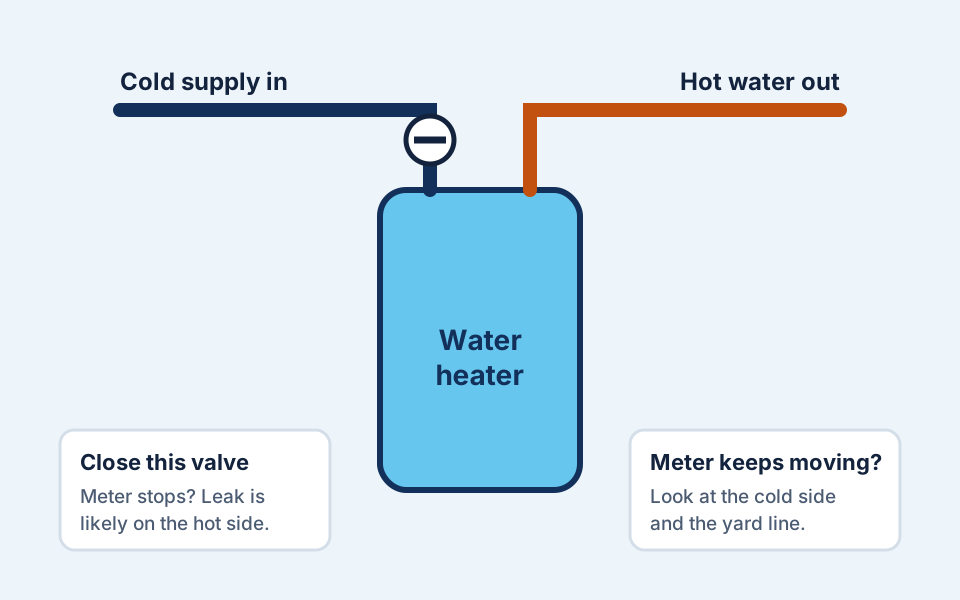
The temperature and pressure relief valve has a discharge pipe that often runs outside or to a drain. If it drips or runs, the water heater may need attention. That's a fixture problem, not a slab problem.
Faucets, hose bibs and appliances
Check under sinks for damp cabinet floors, look at the washer and dishwasher hoses, and run a hand along outdoor hose bibs. A dripping faucet wastes water but rarely moves the meter as much as a hidden leak.
Irrigation
Irrigation can look like a slab leak on the bill. Walk each zone while it runs and check valve boxes for standing water. Closing the irrigation supply during the meter test separates the yard from the house.
When it's probably the slab
If every fixture checks out, the house main stops the meter, and the meter still moves with the house open and everything off, the leak is inside the house but out of sight. That's under the slab or inside a wall. Add a warm spot or a hissing sound and the slab becomes the leading suspect. Then a slab leak detection visit is the right next step.