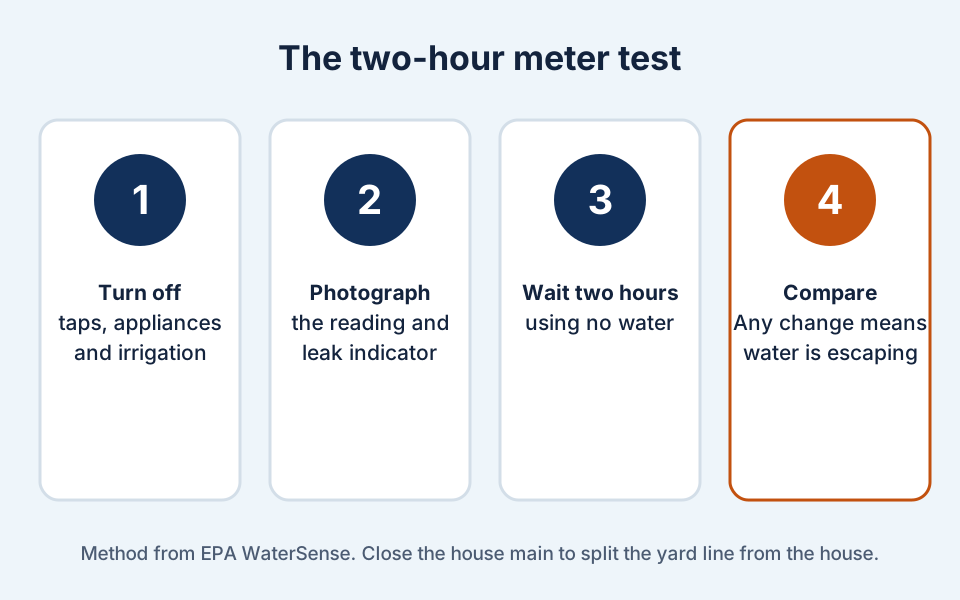
A water bill that jumps without any change in how your household uses water is one of the most common first signs of a hidden leak. Before calling anyone, compare the right months and run the meter test. Those two steps usually tell you whether you're dealing with a leak or a seasonal change.
Compare the right months
In Goodyear, outdoor watering drives the biggest swings in usage, so a June bill will almost always be higher than a February one. Compare this month with the same month last year. Look at gallons used, not dollars, because rates change.
Check whether anything changed: a new pool, a new lawn or plants on drip, a guest staying for weeks, or a rate change from your provider. If nothing changed and usage is clearly up, a leak is a reasonable suspect.
For a winter bill, EPA WaterSense gives a rough line: a family of four using more than 12,000 gallons a month probably has a serious leak, as the water leak detection page explains.
Know who your water provider is
Your bill format, online usage history and the number to call with a billing question all come from your water provider, and the service areas page shows which one serves your part of Goodyear. Many providers show daily or monthly usage online, which makes a sudden step up easy to spot.
Let the meter settle it
The bill tells you usage went up; the two-hour meter test tells you whether water is escaping while nobody uses it.
If the meter stays still, the higher bill probably came from use, not a leak. Look at irrigation timers first, since a stuck valve can run for hours.
Rule out the cheap leaks
A toilet, a softener or a dripping fixture can lift a bill as much as a hidden leak, and the fixture checks take about twenty minutes.
If all of those check out and the meter still moves, the leak is somewhere you can't see: under the slab, in a wall, in the yard line, or in the irrigation system.
What to send when you ask for help
Have your last two bills or your usage history, the meter readings from your test, and a note of anything you've already ruled out. That information shortens the visit, because the leak detection professional can skip what you've already checked. When you're ready, request a leak inspection and we'll set up the visit.